
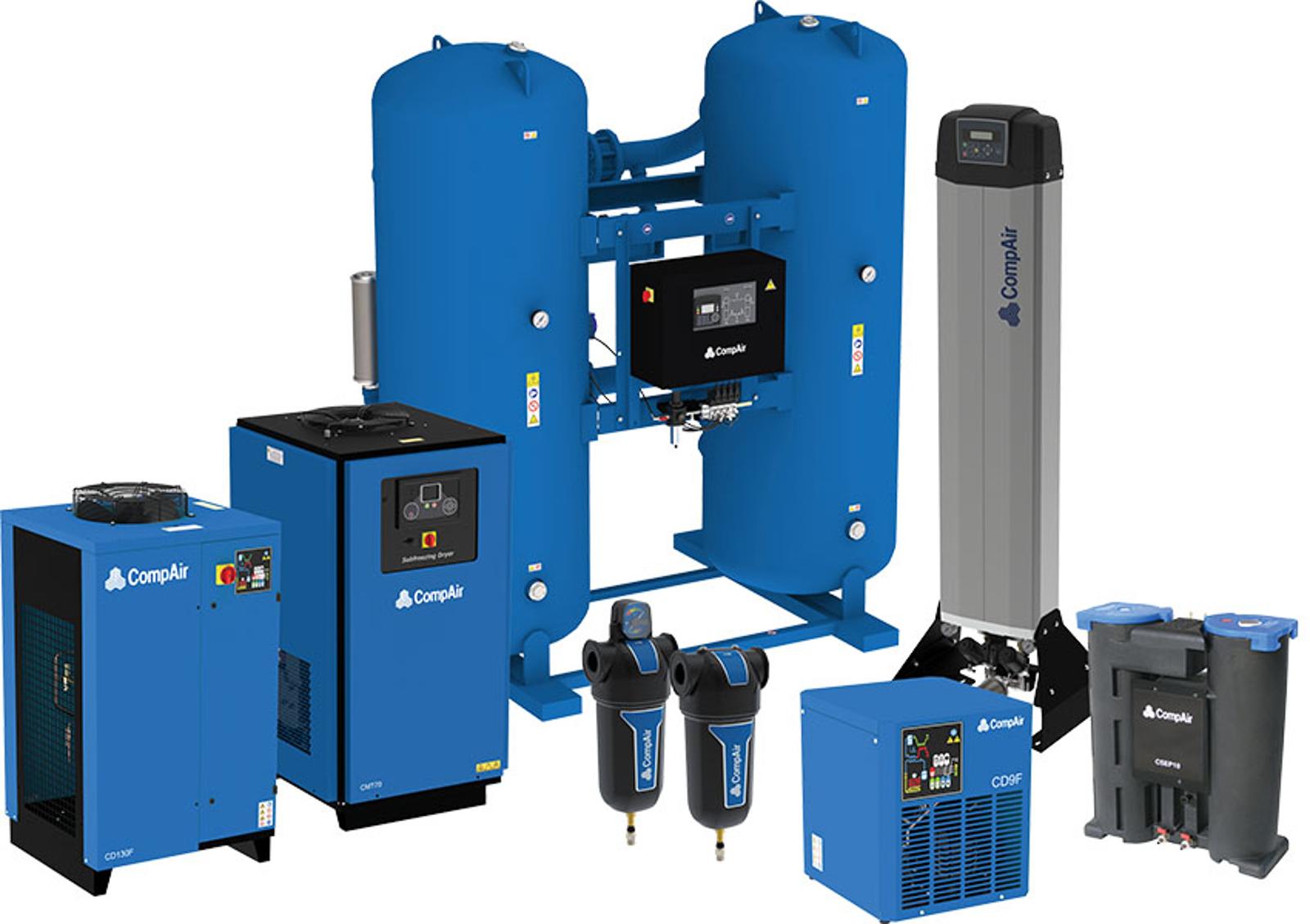
A desiccant air dryer is a type of compressed air treatment system that removes moisture from the airflow through adsorption. Instead of cooling the air to condense water like refrigerated dryers do, desiccant dryers use a moisture absorbing material—known as a desiccant—to directly capture water vapor.
These dryers operate on a working principle that alternates between adsorption and regeneration phases, most often using a dual tower configuration to maintain continuous drying.
Discover the different types of Adsorption Dryers
Product Range
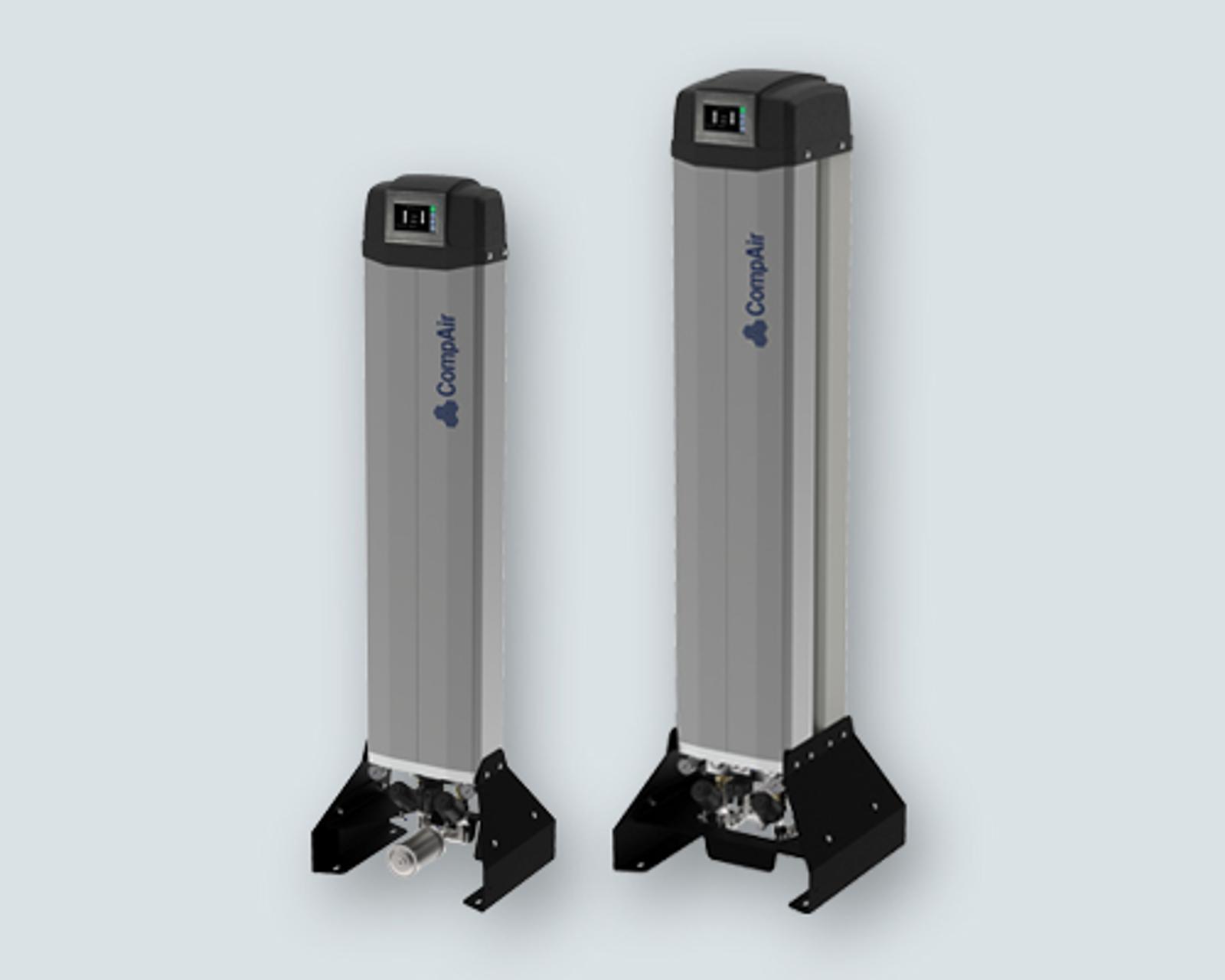
Modular Desiccant Dryers
Optimize your air system with modular desiccant dryers. High-efficiency, compact design for industrial applications. Ensure dry, clean air consistently.
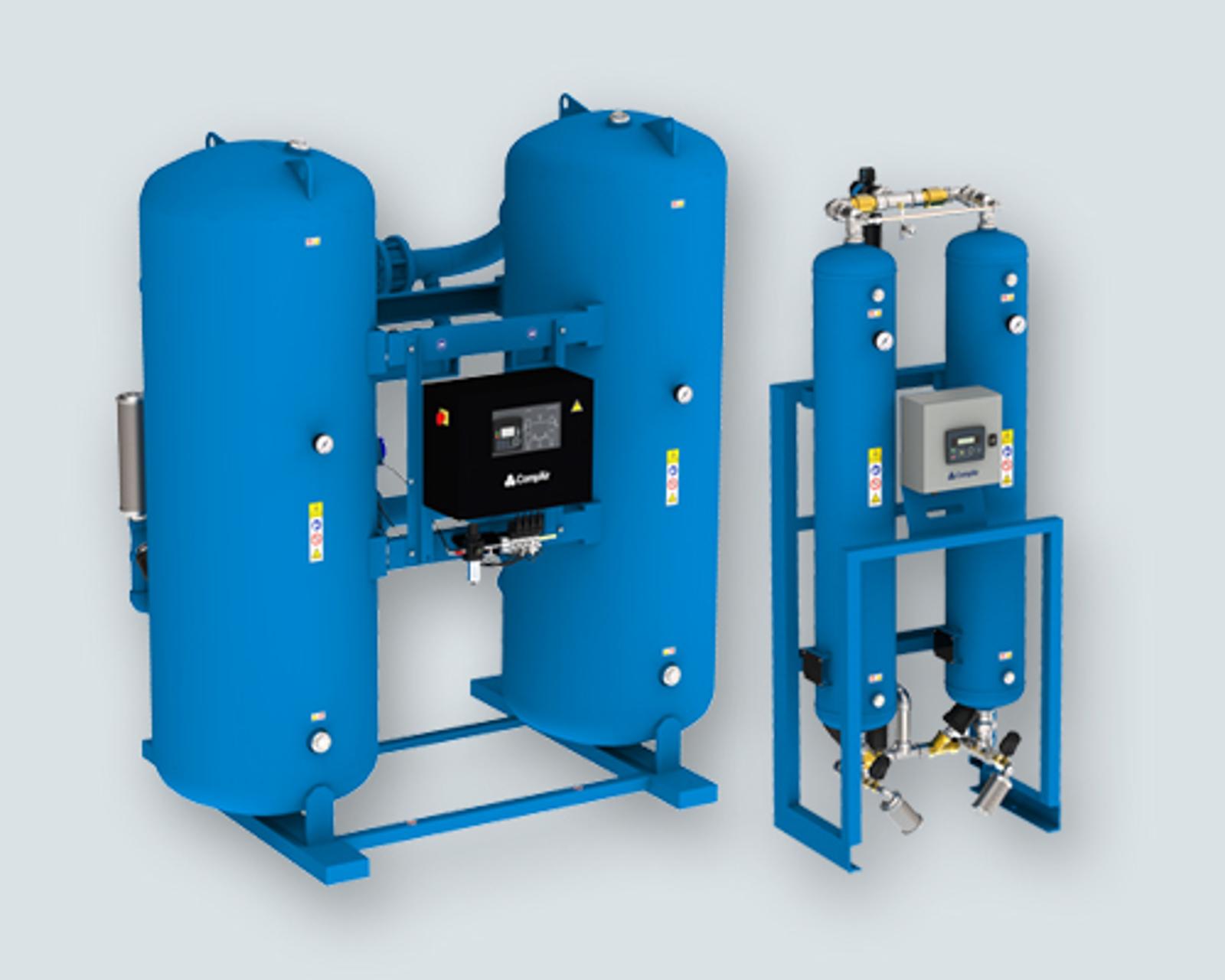
Twin Tower Heatless Desiccant Dryers
Engineered for maximum reliability, long life, and easy service access
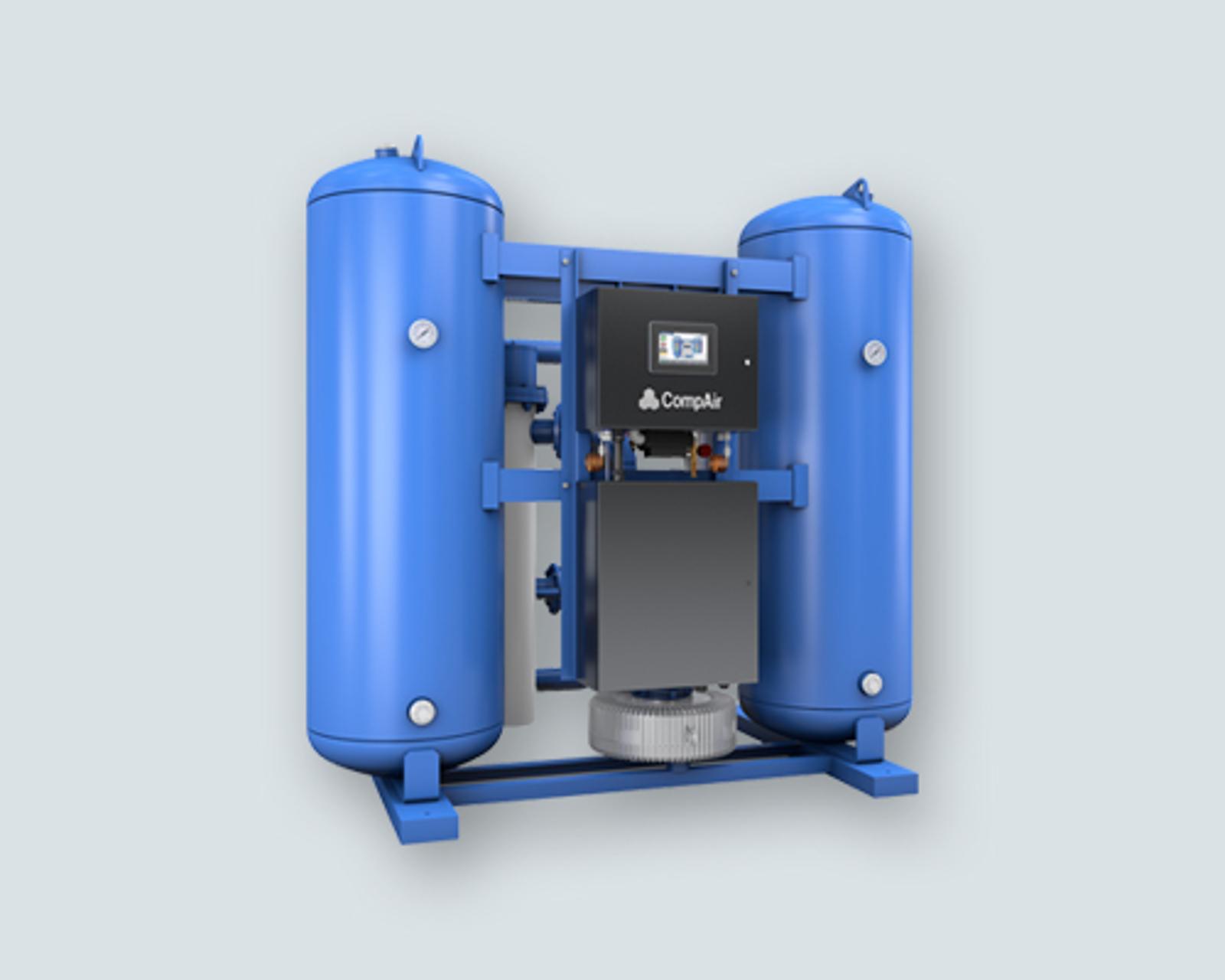
Heated Blower Desiccant Air Dryers
High Performance. Maximum Reliability. Low Profile Design 500 - 14,900 m3/h
As the air contacts the adsorbent material, water vapour transfers from the wet air to the dry desiccant, however, adsorbent materials have a fixed adsorption capacity and once this capacity is reached, they must be regenerated or replaced.
Therefore, to provide a continuous supply of clean, dry compressed air, adsorbent dryers utilise two chambers of desiccant material and at any one time, whilst one chamber is on-line, drying the incoming compressed air, the other is either off-line, being regenerated or is re-pressurised, ready to come on-line.
All desiccant dryers remove water in this manner. The energy consumed by a desiccant dryer can be directly attributed to the method used to regenerate the adsorbent material. CompAir offer a comprehensive range using the latest technology to provide an energy efficient solution at the lowest life cycle costs. Our complete dryer range is produced in-house so the same quality, performance and efficiency standards delivered by our compressor ranges can now be enjoyed from the air treatment range, including the below advantages:
- Robust and reliable industry-proven design
- Suitable for all industries and applications - some desiccant dryer regeneration methods prevent their use in certain industries/applications
- Lower capital investment and reduced complexity compared to other dryer regeneration methods
- Lower maintenance costs in comparison to other dryer regeneration methods
- No heat, heaters, or heat-related issues