Products
Oil Lubricated Air Compressors
Oil Free Air Compressors
Compressed Air Dryers
Air Treatment & Accessories
Industrial Rotary Vane Solutions
Portable Compressors
Compressed Air Managment Solution
Compressed Air Piping System
Custom Engineered Products
Buyer's Guide
Sustainable Compressed Air
Compressed air management systems
CompAir Wiki
Rotary Screw Compressor Technology Explained
Oil lubricated Air Compressor Technology
Which Towable Compressor to Select for Your Application
Variable Speed Compressors for Improved Energy Efficiency
What is Compressed Air ?
Air Compressor Oil
IES2 Efficiency Standard
Industries & Applications
Breweries
Defence Industry Solutions
Construction Air Compressors
Mining Industry
Textiles Industry
Food and Beverage
Pharmaceutical
Chemical
Automotive
Electric Vehicle Manufacturing
Electronics
Industrial Manufacturing
General
Service & Support
Air Audits
Compressed Air Rental Services
Portable compressors service and support
Air Compressor Filter
Airend Replacement
Avoid Leakages
Oil Sampling
iConn
Genuine CompAir Air Compressor Parts
Assure Service Agreements
Compressor Service Schedules
Warranty
Pressure Equipment Check
Dryer Maintenance
How to Improve the Efficiency of Your Compressor Installation
FAQ compressor servicing
About
Become a Business Partner
Careers
Worldwide Locations
News and Events

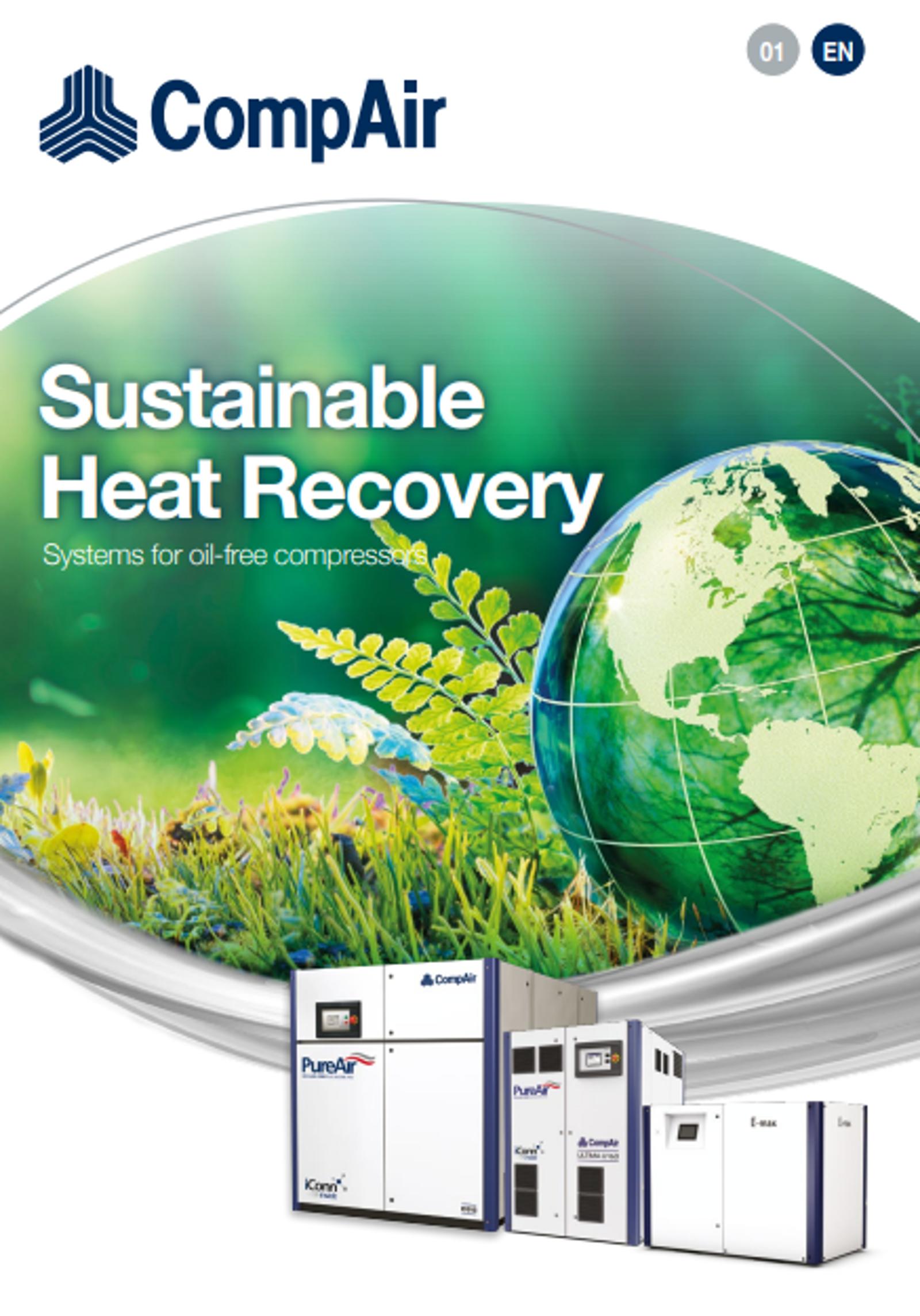
A heat recovery system captures waste heat from an oil-free air compressor and repurposes it for hot water, process heating, or facility heating. This helps reduce energy costs, lower CO₂ emissions, and improve overall system efficiency.

Benefits of Oil-Free Compressor Heat Recovery

Recovering compressor heat can help make better use of energy already consumed by the compressed-air system. The potential benefits include: 

  • Significant energy-cost savings
  • Lower CO₂ emissions
  • Turnkey solution options
  • Easy installation and operation
  • Small installation footprint
  • High reliability
  • No impact on the compressed-air supply


Your results will depend on your installation. Potential savings and payback are influenced by compressor utilisation, annual operating hours, recoverable-water temperature, available heat demand, existing heating equipment, local energy prices and installation requirements.

Recover_the_heat_generated_by_your_air_compressor

To load this content, approve your cookie preferences and allow the required cookies.

How Does Compressor Heat Recovery Work?

A compressor generates heat while producing compressed air. A heat recovery system captures part of this thermal energy and transfers it from the compressor cooling circuit to usable water.

The process can be explained in four steps:

  1. Electrical energy powers the compressor.
  2. Air compression generates heat.
  3. A heat exchanger transfers usable heat to water.
  4. The heated water is supplied to a suitable facility process.

When the facility cannot use all the available heat, a backup cooling system may be required to maintain the compressor’s cooling-water temperature. The E-max system, for example, includes a backup heat exchanger for periods when customer heat demand is insufficient.

Where Can Recovered Compressor Heat Be Used?

Recovered compressor heat can support applications with a regular demand for hot water or low-to-medium-temperature heat. The brochure identifies four principal applications.

Space Heating

Reuse compressor heat to support a suitable facility or building heating circuit.

Industrial Process Heat

Supply recovered thermal energy to compatible industrial processes.

Hot Water Production

Produce usable hot water while reducing demand on separate heating equipment.

Steam Generation Preheating

Preheat water before steam generation to reduce the required heating load.

Turn Compressor Waste Heat into Useful Energy

During compression, most of the electrical energy supplied to an air compressor is converted into heat. Without heat recovery, that energy is removed through the compressor’s air or water-cooling system.

A heat recovery system transfers usable thermal energy from the compressor cooling circuit to water. The heated water can then support another process in the facility, reducing demand on separate heating equipment.

Heat recovery potential: Under ideal circumstances, up to 94% of the compressor’s waste heat may be recovered for reuse. The remaining 6% includes 2% radiated from the compressor and 4% remaining in the compressed air. Actual usable heat depends on the system and operating conditions.
heat-recovery-radial-graph

CompAir Oil-Free Heat Recovery Solutions

CompAir offers different heat recovery configurations for selected air-cooled and water-cooled ULTIMA compressors and water-cooled DX-Series compressors.

The appropriate configuration depends on:

  • Compressor model
  • Rated power
  • Air-cooled or water-cooled design
  • Required water temperature
  • Available facility heat demand
  • Need for an integrated or external system

The compressor and compatibility details below are drawn from the CompAir heat recovery brochure.

Sustainable Heat Recovery Systems for Oil-free Compressors Brochure
ULTIMA™

ULTIMA Heat Recovery Options

The Ultima compressor range offers various heat recovery options to accommodate individual customer needs. The water-cooled models can for example be delivered with just a preparation for external heat recovery, with an additional control of the cooling water outlet temperature (Heat recovery+) or with E-max, an absolute turnkey solution that includes all main components needed in a heat recovery system.

Absolutely unique is the integrated heat recovery option for the air-cooled version of Ultima.  In fact, Ultima is the fifirst and only air-cooled oil-free compressor on the market with optional heat recovery, providing usable water temperatures up to 85°C. It’s a turnkey solution with all required components included in the compressor package. This means no additional footprint, no complex installation and thousands of Pounds of potential savings every year.


Water-cooled

Air-cooled


Preparation for external heat recovery*

Heat recovery+

E-max

Integrated Heat recovery

Internal thermal management to achieve cooling water outlet temperatures up to 90°C

●


●

Control of the cooling water outlet temperature


●

●

●

Control of the heat recovery temperature on customer side


○


Control of backup cooling water flow


○

●**

Heat exchanger for heating the customer’s water


●

●

Backup heat exchanger


●

●

Visualization of the current and accumulated heat recovered


●

●

Water pump


●

●

Compressed air aftercooler

○***

○***

○***

○***

● Standard Option    ○ Optional Add-on

* For the Ultima, this option is part of the standard scope of supply
** The two radial fans of the air-cooled Ultima serve as additional / emergency coolers if necessary
*** In many cases the Ultima already has a sufficiently low air discharge temperature, so an external aftercooler will not be needed

See ULTIMA Heat Recovery in Practice

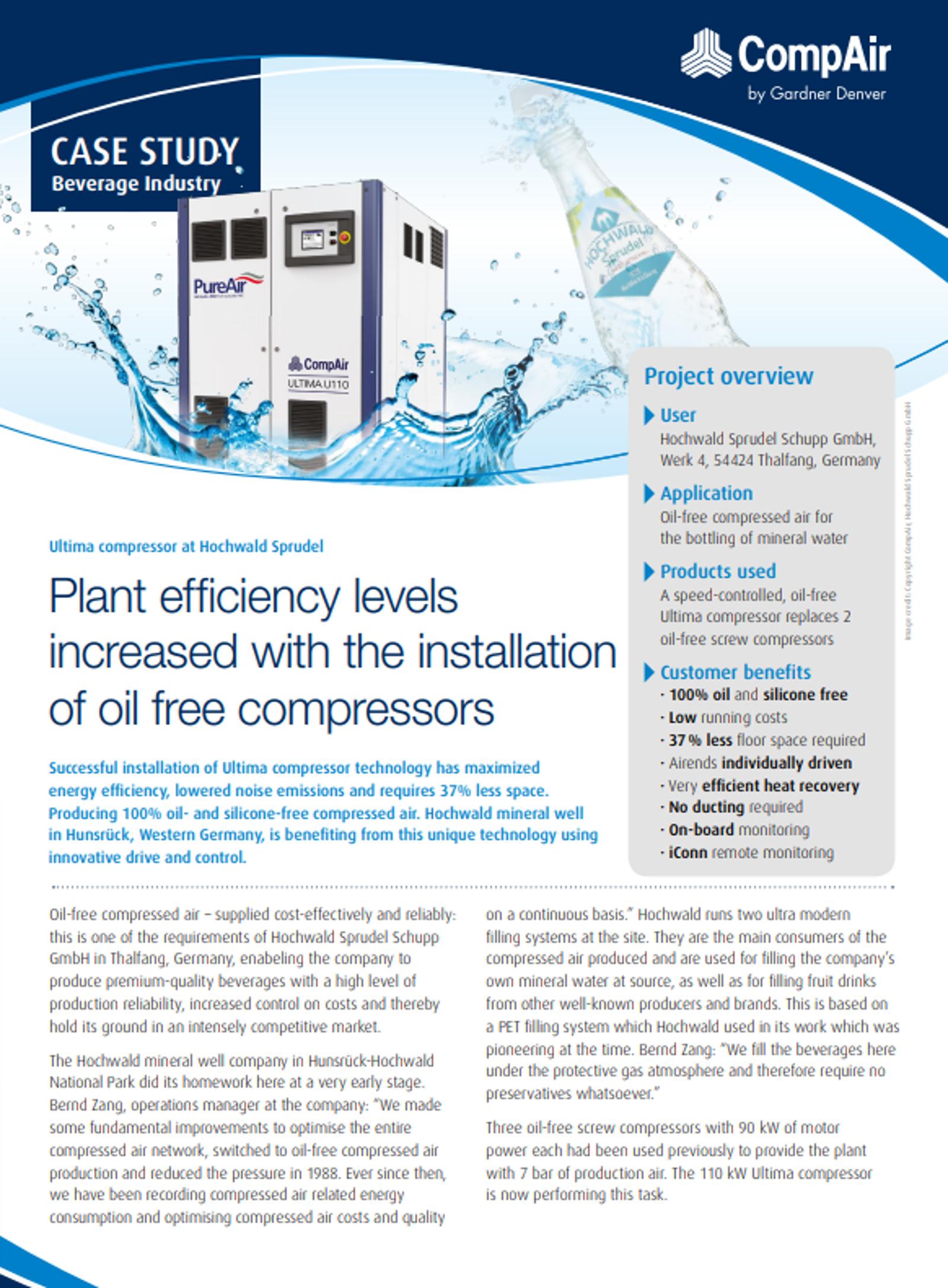
See how Hochwald Sprudel uses ULTIMA compressor technology as part of an energy-efficient compressed air installation, including effective heat recovery.

Hochwald Sprudel Case Study EN
D-Series

Water-cooled DX-Series compressors

All water-cooled D-Series compressors, from 37 kW to 315 kW, are available with preparation for external heat recovery. Depending on the model, recovered heat can be used to provide hot water at temperatures of up to 75°C or even 90°C.

Models up to 200 kW are also compatible with E-max, the turnkey heat recovery solution.

heat-recovery-D-series
E-Max

E-Max: turnkey heat recovery system for oil-free compressors

Scope of supply

  • Heat recovery heat exchanger to heat up your usable water
  • Backup heat exchanger, operated in times when the heat demand is not sufficient to cool down the cooling water to the requested max. inlet temperature for the compressor
  • Speed regulated pump to control the cooling water temperature before the heat recovery heat exchanger
  • Intuitive coloured touch screen controller providing a quick and comprehensive performance overview, including visualisation of current and cumulated recovered heat


Broad range of further options:

  • Electrical valve kit 1: To control the water outlet temperature on the customer side of the heat recovery heat exchanger
  • Electrical valve kit 2: To control the external cooling water flow through the backup cooler in order to reduce water consumption when the backup cooler is not needed
  • Additional backup pump
  • Connecting kit comprising ball valves and adapters from Victaulic to 1" internal threads for all water connections
  • Compressed air aftercooler (provided loosely. The E-max box as a standard includes inlet and outlet connections for the aftercooler's cooling water)
e-max-open-compressor

U-Cooler/E-Cooler - a perfect extension for E-max

Highly efficient V-shaped cooling module for trouble-free waste heat removal from the ULTIMA cooling cycle. A complete package of cooling module, pump station and control integrated into the compressor. Easy to install, easy to operate and virtually maintenance-free.

e-cooler-u-cooler

Compare CompAir Oil-Free Heat Recovery Options


Solution

Compressor configuration

Heat recovery approach

Temperature

ULTIMA integrated heat recovery

Air-cooled ULTIMA

Components integrated into the compressor package

Usable water up to 85°C

ULTIMA external heat recovery preparation

Water-cooled ULTIMA

Prepared for connection to an external system

Configuration dependent

ULTIMA Heat Recovery+

Water-cooled ULTIMA

Additional cooling-water outlet-temperature control

Configuration dependent

ULTIMA with E-max

Water-cooled ULTIMA

External turnkey heat recovery system

Application dependent

DX-Series external heat recovery

Water-cooled DX-Series, 90-355 kW

Preparation for external heat recovery

Up to 75°C or 90°C, model dependent

E-max

Compatible oil-free compressors

Packaged heat exchangers, pump and controller

Compressor and application dependent


Frequently Asked Questions About Compressor Heat Recovery

Compressor heat recovery captures thermal energy produced during air compression and transfers it to a usable heating circuit. The recovered heat can support space heating, industrial process heat, hot-water production or preheating for steam generation.