There is great potential for optimising the efficiency of the compressed air supply and this can often be exploited with little investment. Since energy costs account for more than 80% of the total operating costs of a compressor, even the gradual exploitation of this potential is effective. The user saves energy costs after only a short time and at the same time reduces CO2 emissions, watch the video to see how:
Top_Tips_for_Air_Compressor_Optimization
To load this content, approve your cookie preferences and allow the required cookies.
Carry out an air check
If you are thinking about buying a new compressor or want to upgrade an existing system, we recommend that you have a compressed air check carried out as a matter of course.
A compressed air check is a very precise procedure in which a data recording device is attached to each compressor in the network, without affecting the production process.
The results show the exact pressure and volume flow of the entire system and allow the simulated selection of compressors to ensure that properly sized compressors are installed. This allows system efficiency to be optimised, thus reducing energy consumption and ensuring the reliability of the overall system. Advanced integrated compressor control systems support continuous data logging, so if the system profile changes, the compressors can also be adjusted to ensure that maximum efficiency is achieved at all times.
Heat recovery
Determine and improve compressor efficiency
The efficiency of a compressor can be checked with a rule of thumb in which a quotient of compressor power (kW) and the delivery volume (m³/min) at nominal pressure is used to determine whether the compressor needs to be replaced.
The efficiency of the compressor is fully exploited if the air drawn in is as clean and cool as possible. A prerequisite for effective compressed air production is therefore the consideration of climatic conditions (humidity / temperature) when planning the system.
For energy-efficient compressor operation, the lowest possible idling speed should be aimed for. The energy requirement at idle can be considerable, especially with older compressors. If several compressors are in use, splitting them into basic and peak load machines is a good solution.
Avoid leaks
Be aware of network pressure
Size downstream equipment correctly
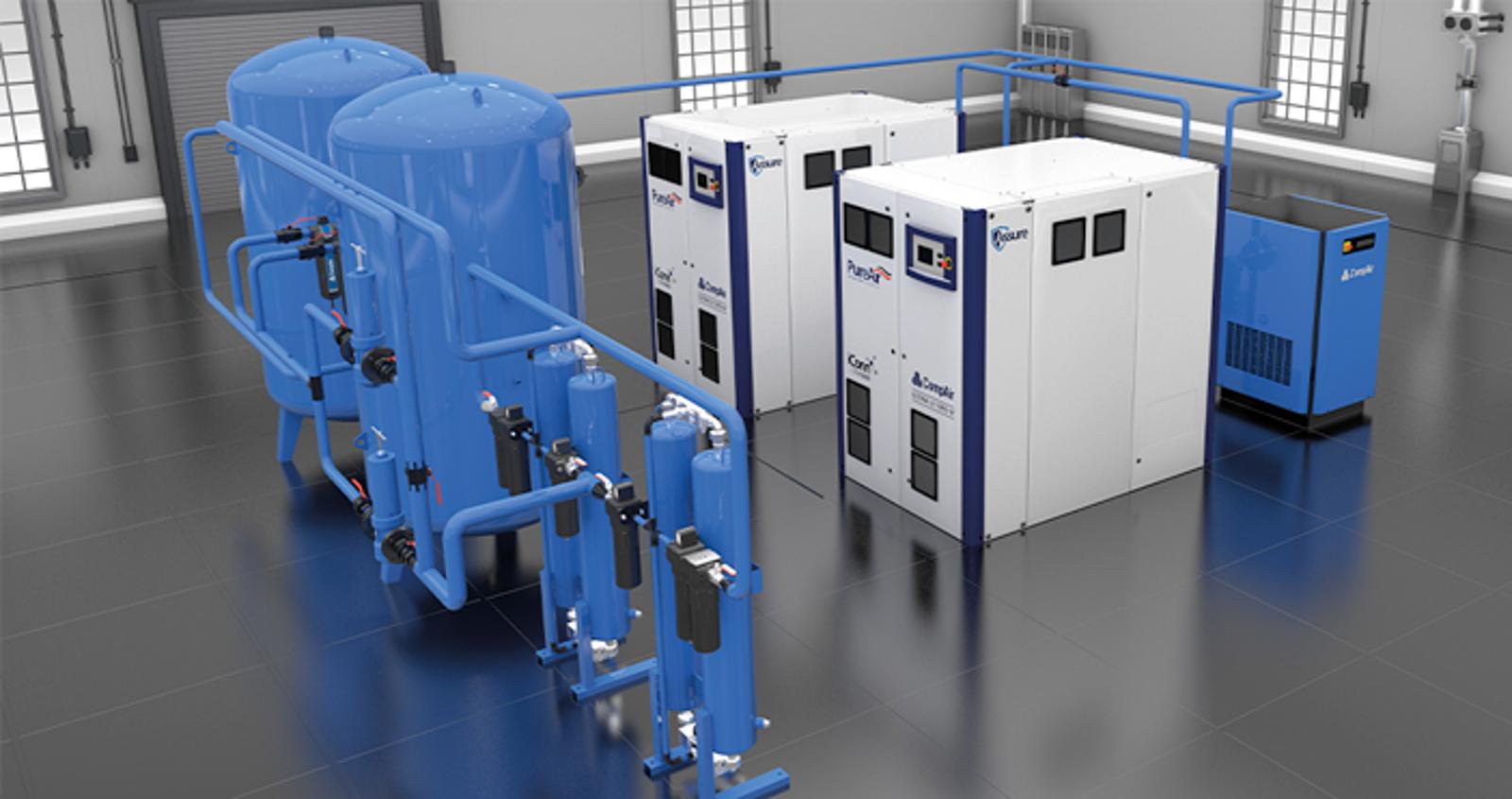
The principle of "as much as necessary – as little as possible" applies to compressed air treatment, and the question "centralised and/or decentralised?" should also be decided with a view to energy efficiency. When selecting filters, not only is the validated separation efficiency (ISO12500-1) important, they must also have the lowest possible flow resistance, as this directly affects the energy requirements of the compressor. Use level or electronically controlled condensate drains. The decision for the dryer principle (refrigerant dryer/ cold or warm regenerating adsorption dryer) for new installations or retrofits, depends on the required compressed air quality (ISO 8573-1:2010), the required compressed air volume and the required pressure dew point. The weekly check of non-automatically monitored treatment components has a positive effect on the safe and efficient compressed air supply.
Regular replacement of filter elements can help to avoid pressure drops. If a filter is clogged, the compressor has to use more energy to overcome the blockage through higher pressure. Weekly checks of downstream filters allow potential problems to be identified before they occur.
Eliminate off-load running
No-load operation deserves special attention, as the compressor continues to run and consumes energy without producing compressed air.
In addition, the compressor is stopped and restarted, which leads to increased wear and tear on the components and increases operating costs due to higher maintenance costs and energy consumption.
Proper sizing of the system, or the installation of an intelligent compressor control system to ensure the most suitable configuration for the application, will ensure highly efficient and reliable operation.
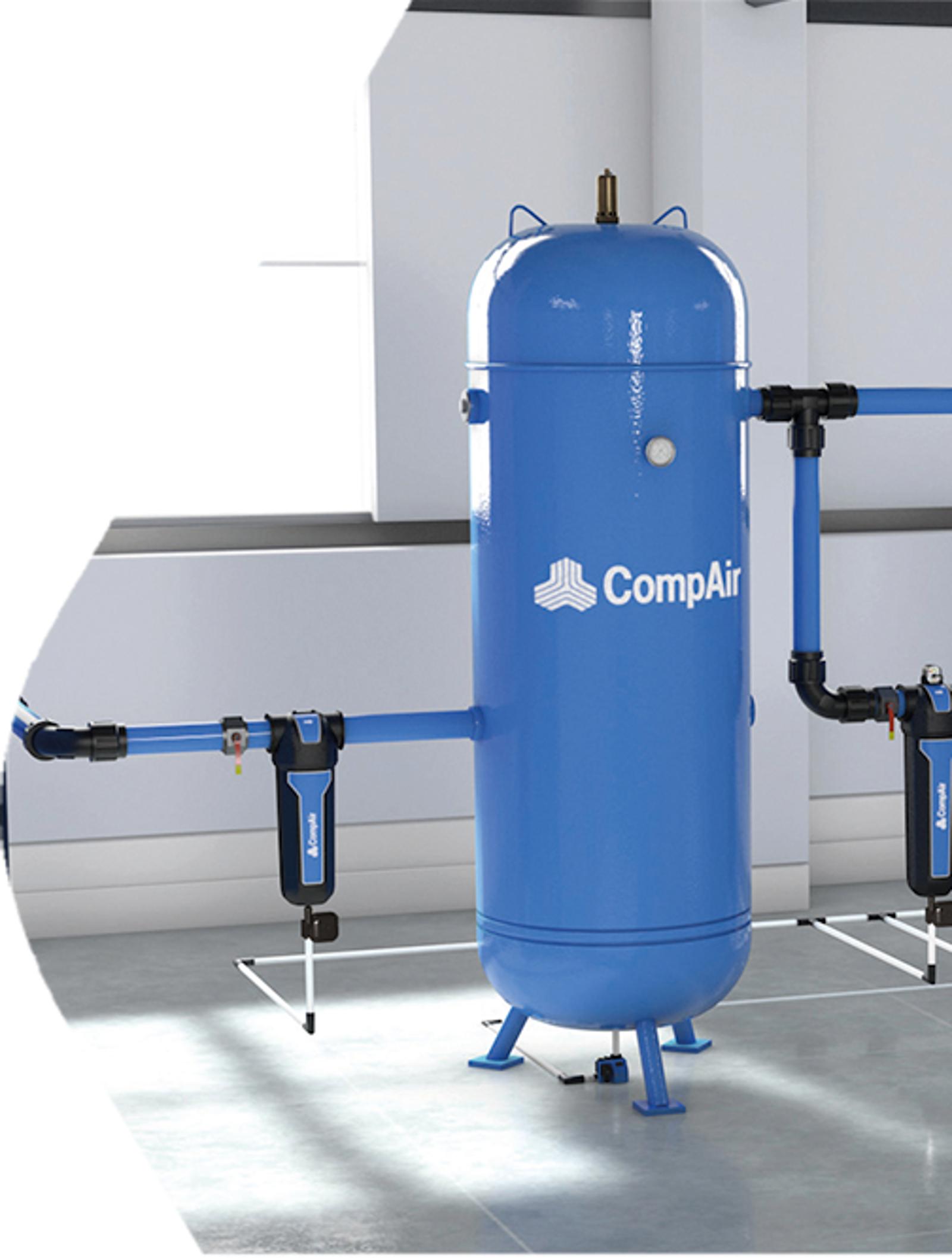
Specify the correct receiver size
Using the right technology
The better the compressor is adapted to the respective task, the more efficient it works. The parameters to be considered here include the operating pressure (min/ max), the volume flow (min/ max) and also the required compressed air quality according to ISO 8573-1:2010. The application and the safety level of the supply ultimately determine whether the higher investment in an oil-free compressor is justified. And if the compressed air demand fluctuates, the extra cost of purchasing a speed-controlled compressor is almost always recouped.
The installation of a new, energy-efficient model can pay for itself within a short time. Many customers have been able to achieve excellent payback times in cooperation with CompAir!
Use genuine spare parts
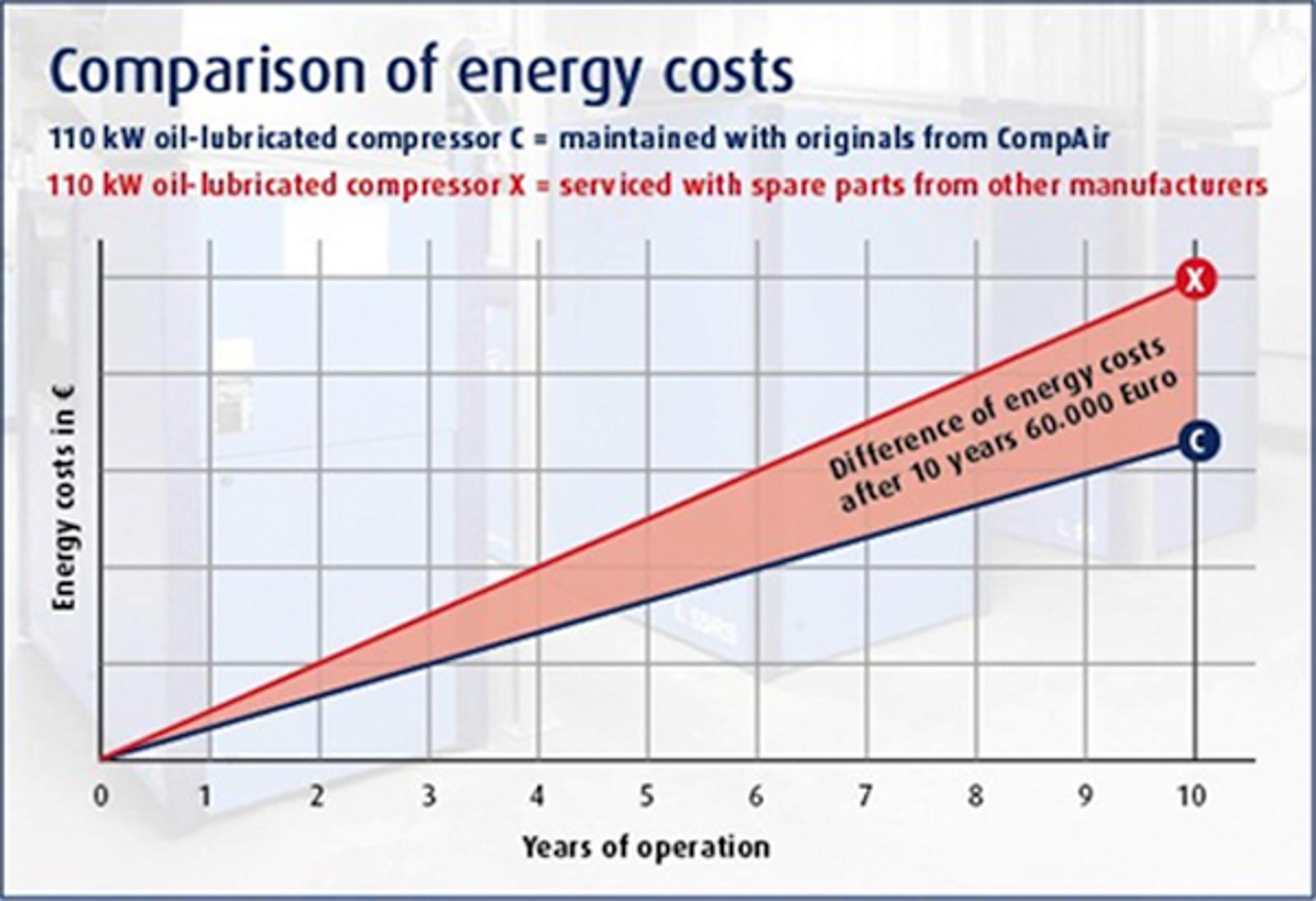
Original spare parts offer the best guarantee for long service life and efficient system operation. This applies to compressor stages, valves and seals, but also to lubricants and processing components. The design, materials and quality of the spare parts directly follow the further development of the compressors. Experience shows: The often small additional investment for original parts pays for itself - not only because of the warranty.

Continuous service
Continuous service and maintenance is a central prerequisite for permanent reliability and efficient operation of the compressed air supply.
Our claim is the best possible adaptation to the needs of our customers. Smart Maintenance is not a luxury, but an economically sensible investment that ensures a smooth production process. Our experienced and qualified service technicians and partners maintain your compressors according to high quality standards and with accurate documentation.
The maintenance and protection of compressors is of vital importance for a manufacturing company. At your request, we can undertake both planned and unplanned repairs to complex machines and systems in order to maintain or restore them to full operational capability.
However, we advise you to take out a full maintenance contract including the free iConn compressor service, which includes regular performance and safety checks. This covers emergency repairs as well as preventive maintenance and the supply of original spare parts.

Proactive maintenance with iConn
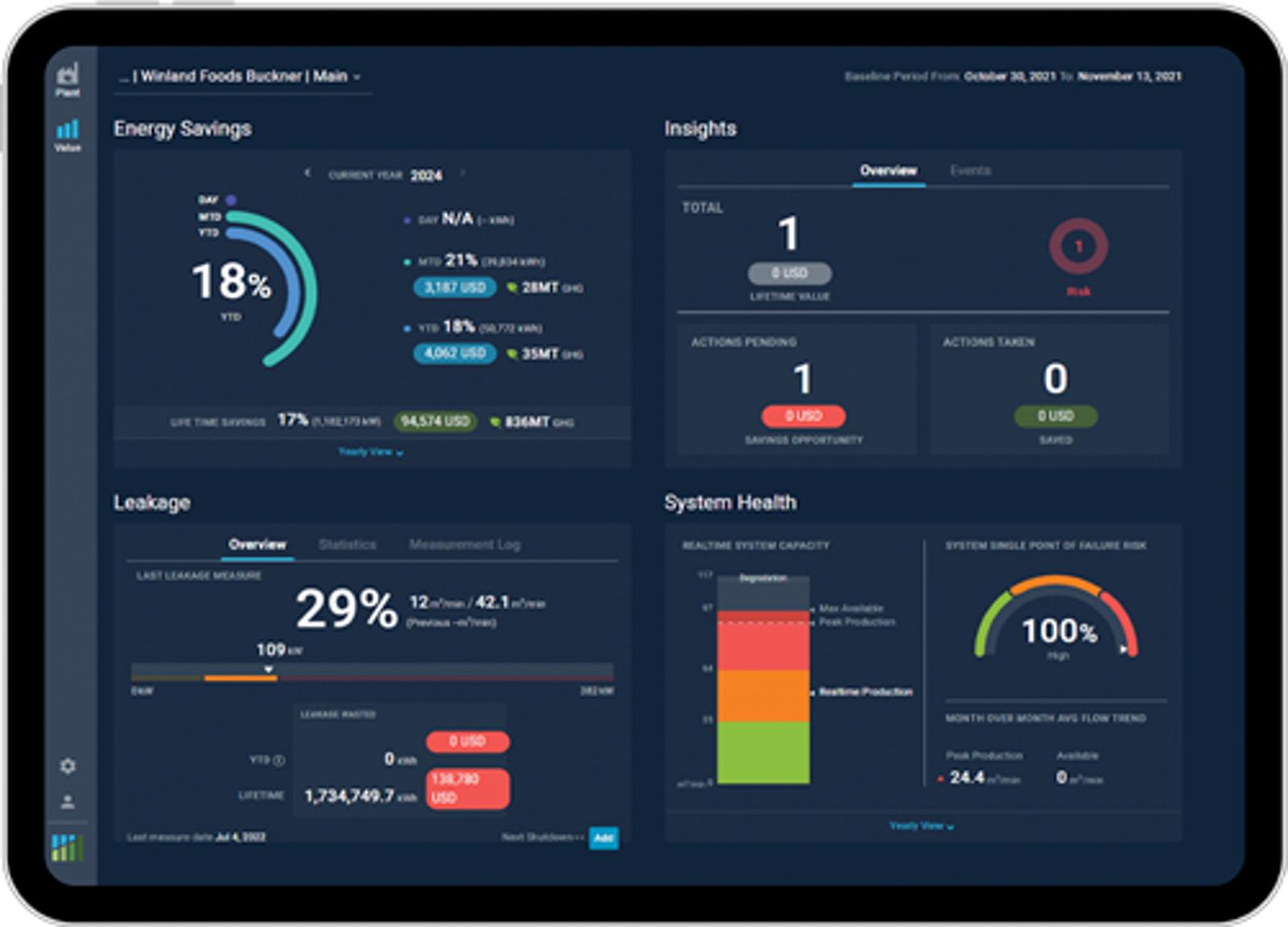
iConn Monitoring provides compressed air users with comprehensive, real-time machine data that is essential for accurate production planning and investment protection.
iConn is designed as an open platform that also supports compressors and treatment products from other manufacturers – thus providing meaningful analysis with added value.
iConn is part of the standard equipment of new compressors, but can also be retrofitted as a "retrofit solution" into existing compressor plants and also into compressors of other manufacturers.